When progress feels invisible, motivation disappears.
Therapists already track milestones and improvement data, but patients needed a personal way to stay engaged between sessions — something that helped them see growth they owned.
Client
NOCD (mental-health tech platform)
Role
Lead Product Designer
Team
Product, Clinical Ops, Engineering
Scope
Feature UX/UI, visual tone, interaction design
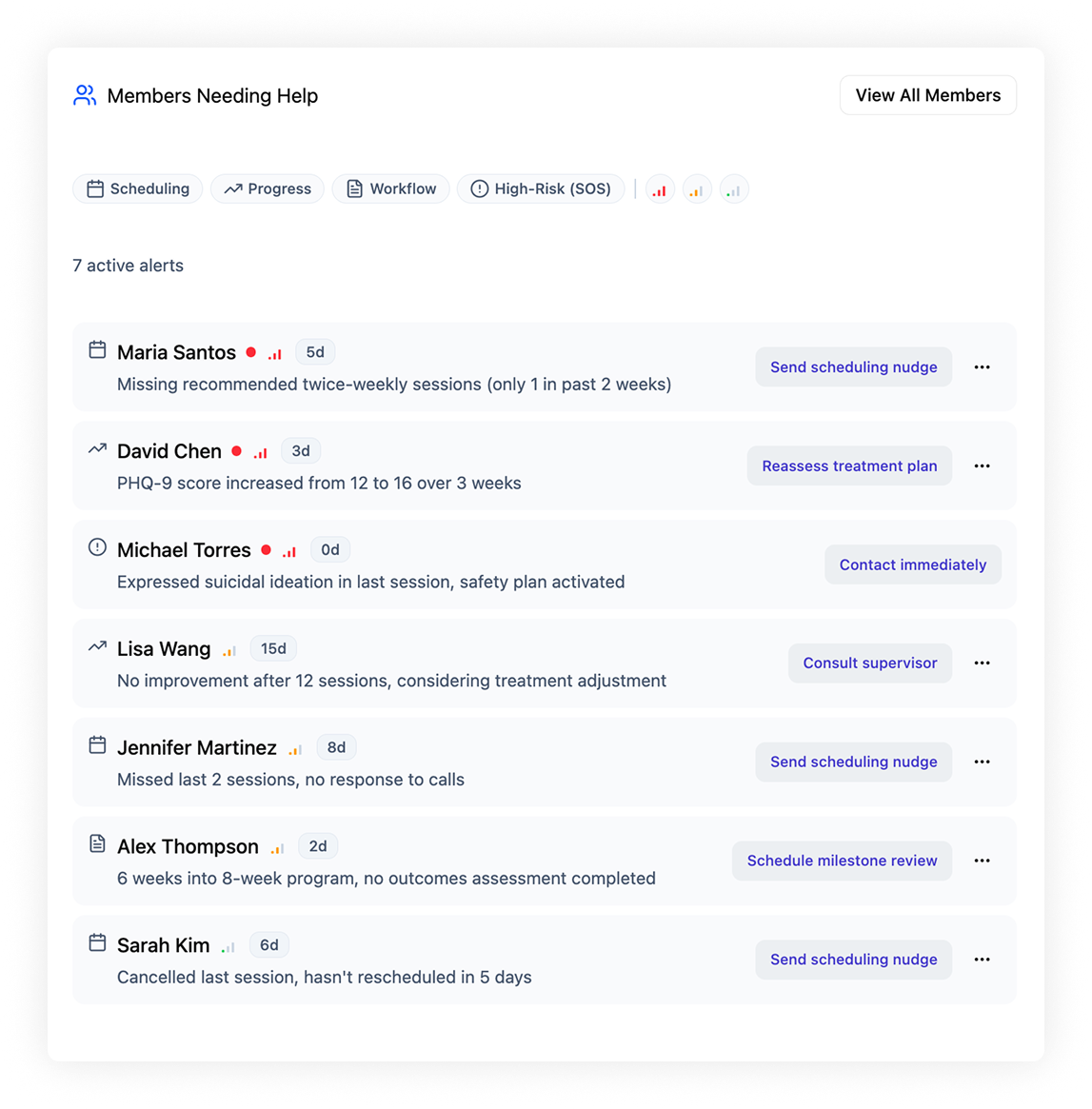
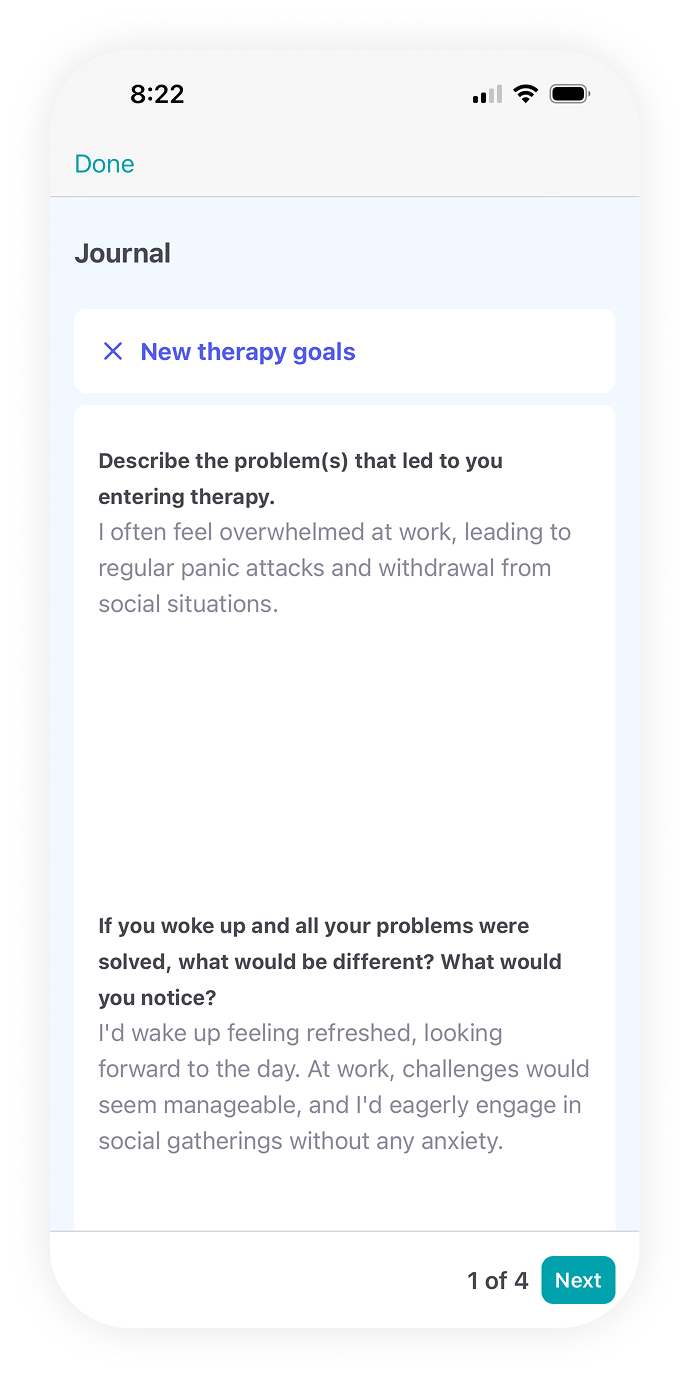
Managed by therapists, clinical milestones were useful for treatment but not self-motivation.
The Problem
There was no private space in the existing product for users to set their own goals, reflect, or track incremental wins. The hypothesis: if members felt more personally involved in their progress, they’d be more likely to stick with treatment.
So we set out to design a small, self-directed feature that built confidence without therapist oversight.
The solution: help members recognize recovery in everyday ways, not just in data.

Personal by design, meaningful by intent.
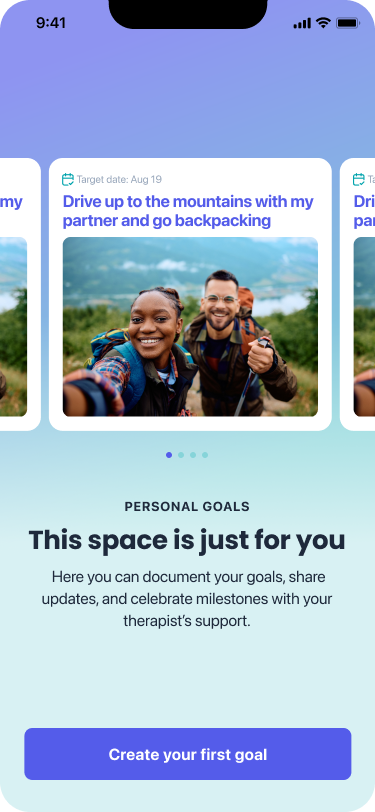
We designed a user-facing feature focused on personal agency and reflection. The experience allowed individuals to:
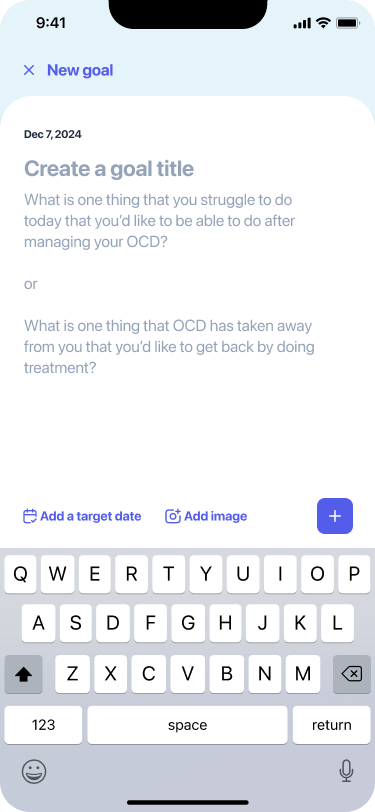
Set goals privately
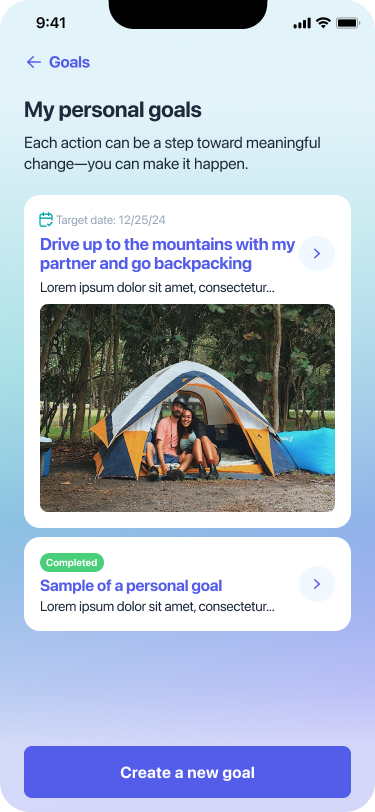
Track small, meaningful wins
Revisit progress over time without external pressure
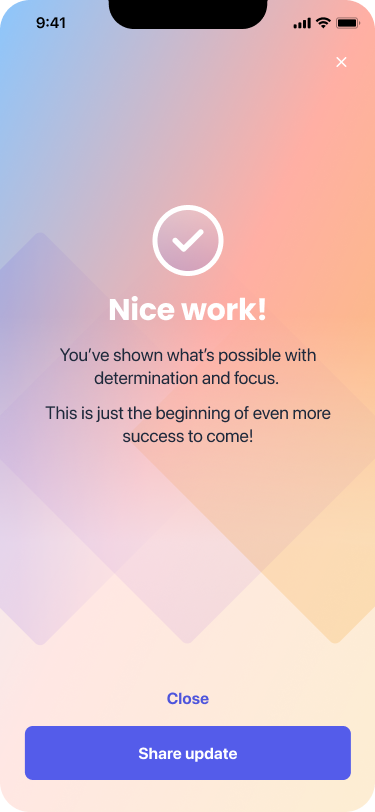
Sharing optional: completed goals can be shared with a therapist to support conversation in sessions, or surfaced externally on social channels.
Rather than prescribing success metrics or rigid milestones, the feature emphasized flexibility and self-definition, acknowledging that progress in treatment is rarely linear.
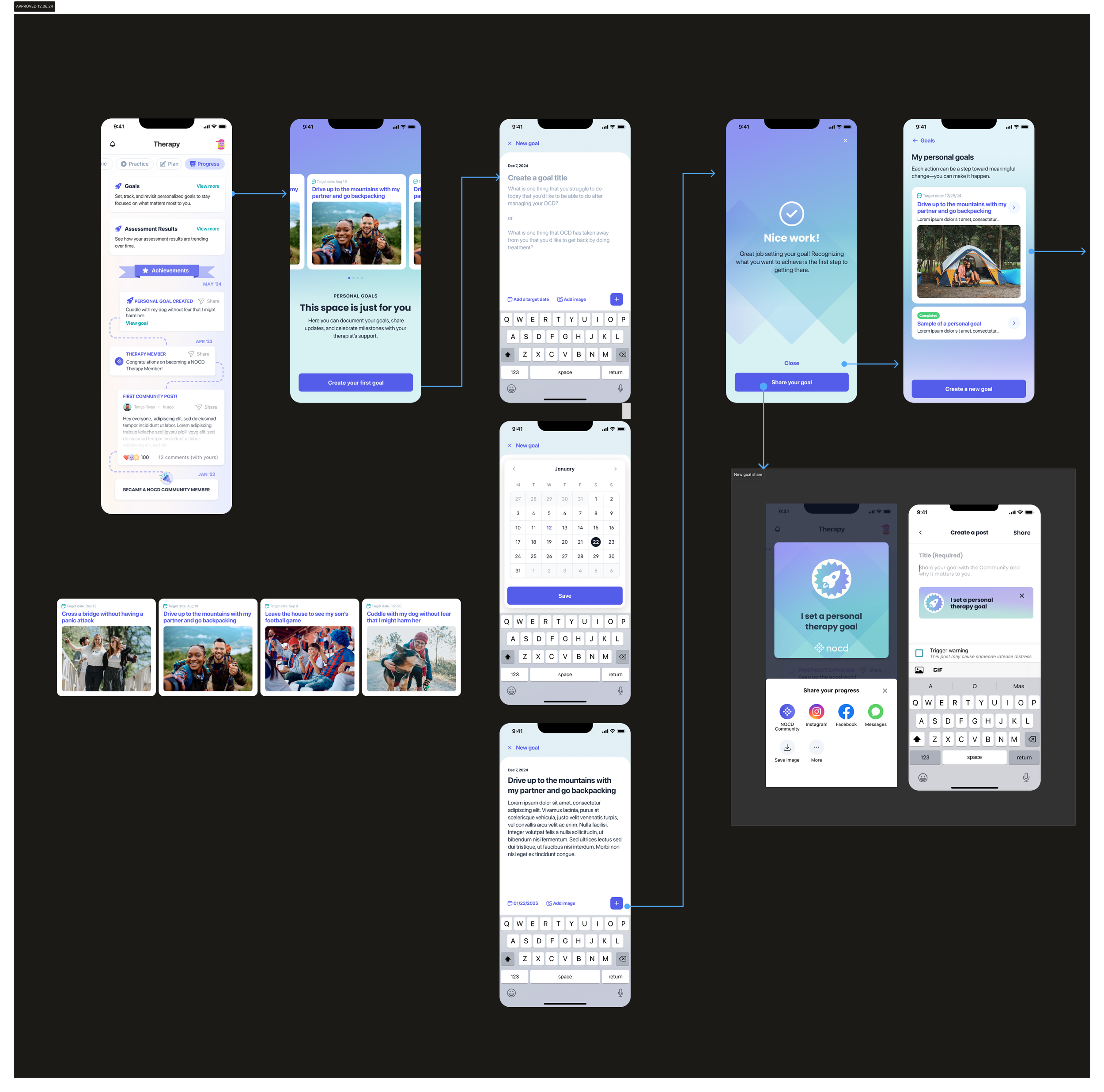
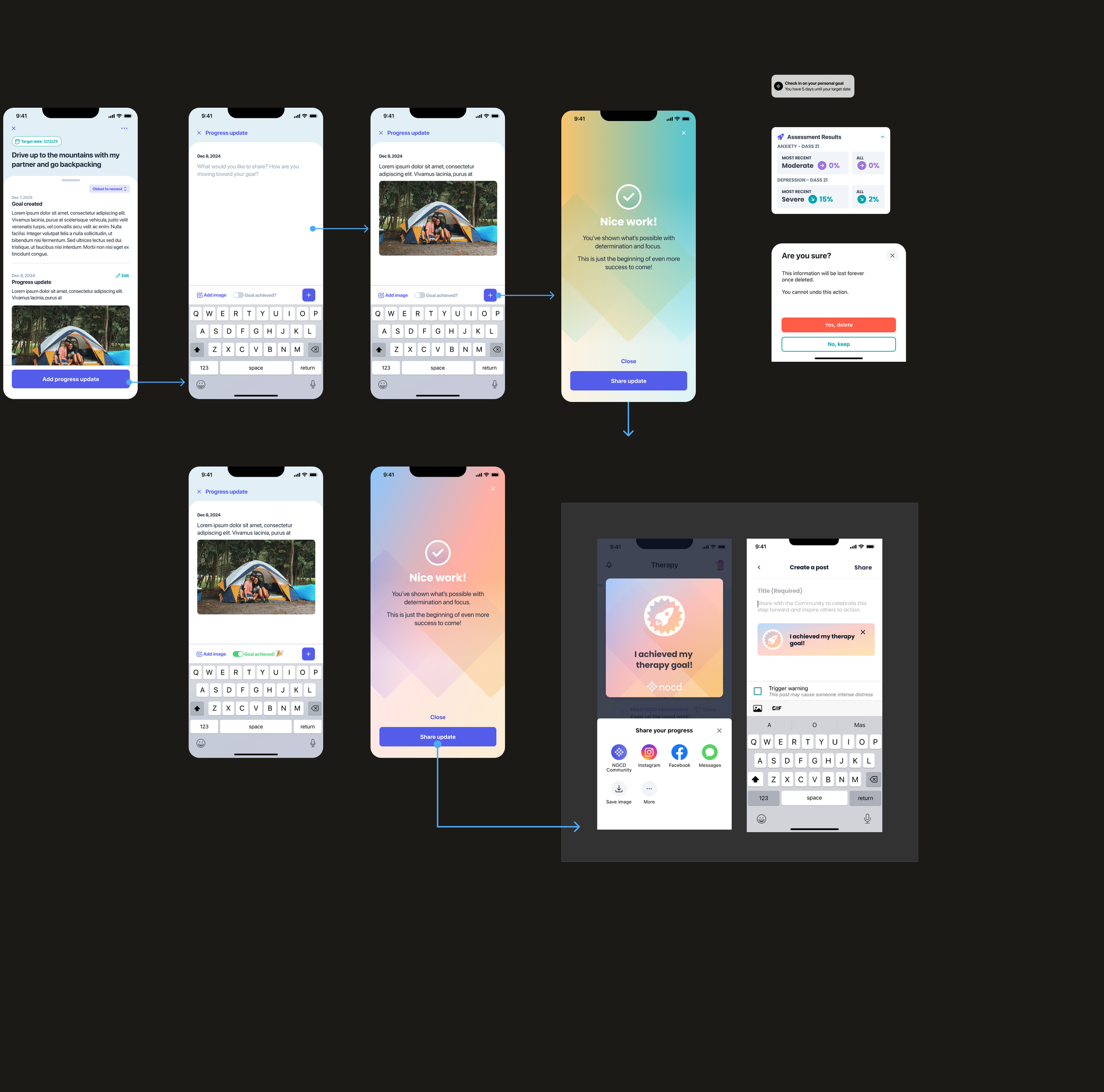
From clinical tracking to reflective practice.
We aligned the feature closely with the brand’s emphasis on calm, clarity, and care by grounding the experience in a familiar journaling pattern. Goals were framed as personal reflections rather than metrics, with simple prompts and open language that encouraged users to write, revisit, and mark progress in their own words.

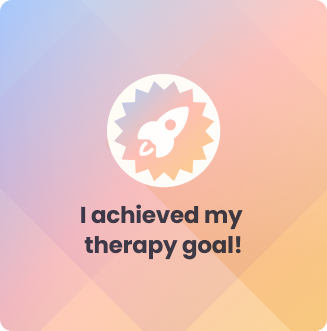
A small feature that shifted ownership inward.
The Response
Individuals began treating the space like a journal: setting intentions, noting small wins, and returning to reflect between sessions. Therapists reported more grounded, productive conversations when goals were shared, anchored in language that came directly from the person in treatment rather than the system.
Not big launches or hard metrics — just quieter signals of engagement, confidence, and continuity. Exactly what the feature was designed to support.
Reflection isn’t a feature, it’s a practice.
Good design creates space for awareness so that personal progress feels real.